





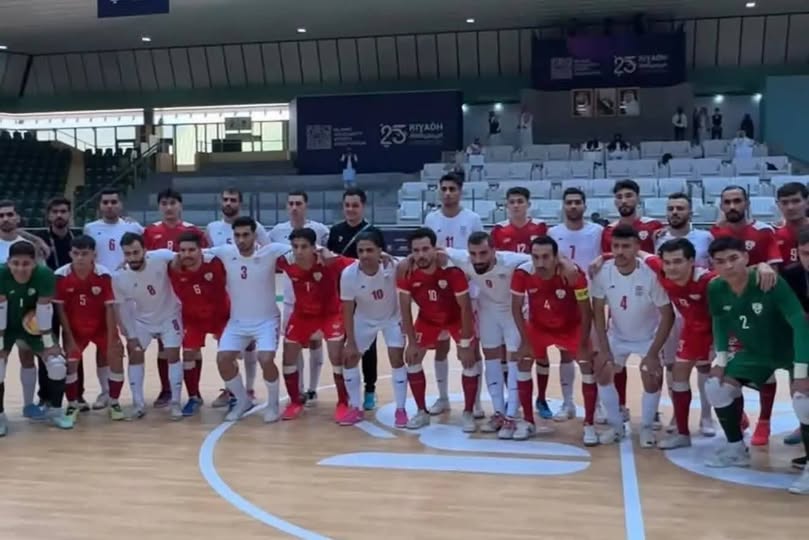
Today’s draw between Afghanistan’s futsal princes and Iran effectively invalidated all the excuses Iranian media and officials had made to justify their country’s shocking and painful defeat to Afghanistan’s U-17 team. It clearly proved that Afghanistan is no longer just an emerging phenomenon but a genuine and rising power in Asian futsal.
After that historic loss in the final of the Asian Youth Championships in Bahrain, the head coach of Iran’s U-17 team, under pressure from the psychological warfare created by Iranian media, had said: “We couldn’t even match Afghanistan’s senior team.” But now the situation has completely reversed. Considering that Iran’s senior team has an older average age than Afghanistan’s national futsal team, it is now evident that even Iran’s seniors could not overcome Afghanistan’s young lions. Once again, Iran’s long-standing dominance and aura as Asia’s undisputed futsal powerhouse have been seriously challenged.
With a brilliant and inspiring performance against Iran, the Lions of Khorasan have proven that the victory and championship of Afghanistan’s youth team were not accidental. Rather, they were the result of thoughtful planning, dedicated effort, and the incredible progress of Afghan futsal in recent years.
What Vahid Shamsaei, Iran’s head coach, said after the match in his interview with Iranian media, revealed many truths. He admitted responsibility for what he called a “draw that feels like a defeat” for Iran, acknowledging Afghanistan’s high motivation and the overconfidence of his own players as key factors behind the result. He also emphasized that futsal, worldwide, is based on effort and teamwork — not on the names or reputations of players and teams.
Although Shamsaei handled the post-match situation professionally — attributing the result to technical issues and admitting that his team underperformed — it seemed he was trying to conceal some of Iran’s deeper weaknesses. Iranian journalists made repeated efforts to link this match to the heated controversy that followed the youth final in Bahrain, attempting to draw Shamsaei into the argument, but he wisely kept his composure and avoided it.
On the other hand, the flow of the match itself made it clear that Iran’s bitter defeat to Afghanistan’s youth team had left a deep psychological impact on the senior squad — despite Shamsaei’s denial. The behavior of Iran’s players on the court showed clear signs of mental pressure and fear of another loss. Each time they scored, their exaggerated celebrations suggested relief and anxiety — as if they had just beaten Brazil. This reaction vividly reflected the fear in their minds and confirmed that, at present, it is Iran that fears the power, technique, tactics, and creativity of Afghanistan’s futsal princes. Shamsaei’s own remark that he “failed to prepare his players mentally and psychologically” indirectly points to this very truth.


Read More
Afghanistan National Futsal Team Starts Strong with a Decisive Victory over Tajikistan
Afghanistan National Futsal Team Faces a Tough Challenge in the “Group of Death” at the Islamic Solidarity Games
The Lions of Khorasan Crowned Champions After a Historic Humiliation of Iran